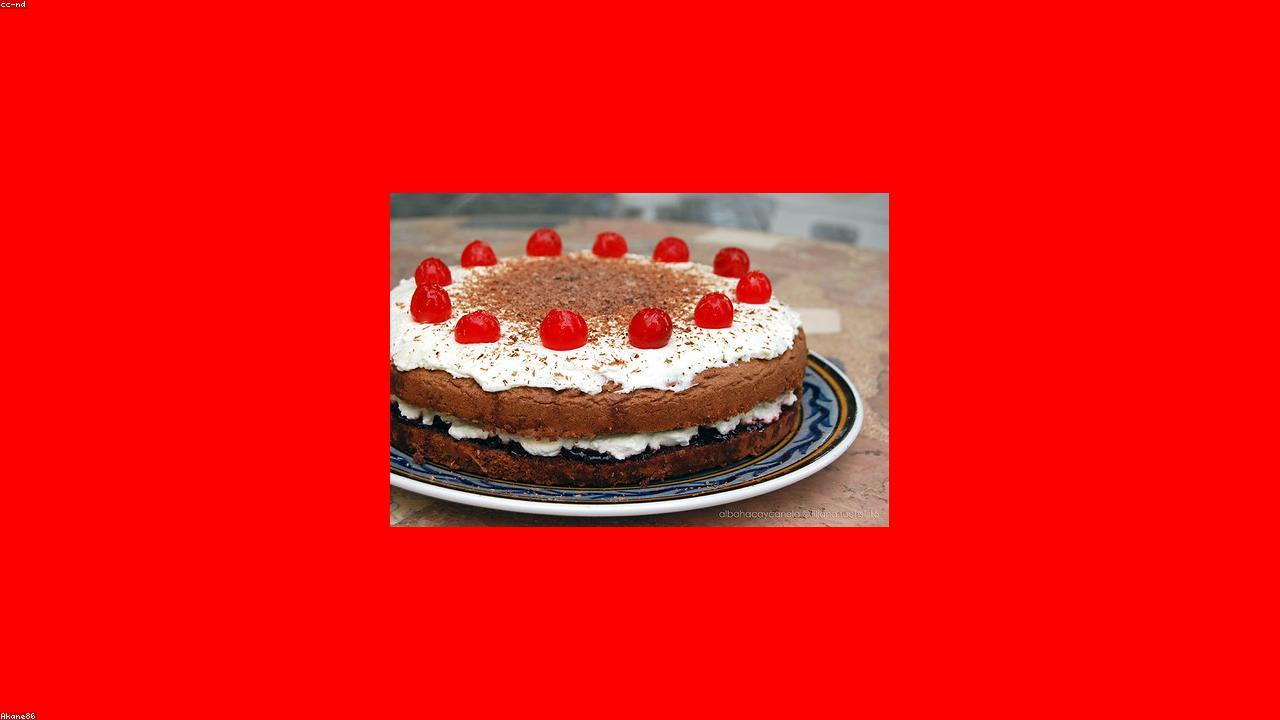
The Black Forest gâteau — in German, the Schwarzwälder Kirschtorte — is Germany's great celebration cake: layers of chocolate sponge stacked with tart cherries and billows of whipped cream, finished with a flurry of dark chocolate shavings and a ring of glossy cherries on top. It looks generous and feels festive, the kind of cake wheeled out for birthdays and Sunday gatherings.
But beneath the cream sits a defining, non-negotiable ingredient: kirsch, the clear cherry brandy of the region. So central is it that German food law actually requires the spirit to be present before a cake may legally carry the name.
The four classic components
A true Schwarzwälder Kirschtorte is assembled from four elements in balance:
- Chocolate sponge. Several thin layers of light, cocoa-rich sponge form the structure — airy rather than fudgy, so the cake stays sliceable.
- Sour cherries. Tart morello (sour) cherries, not sweet dessert cherries, give the cake its bright, acidic backbone and cut through the richness.
- Whipped cream. Lightly sweetened cream fills the layers and coats the cake, lending the cloud-like volume the gâteau is known for.
- Chocolate shavings. Curls and gratings of dark chocolate cover the sides and crown, with whole cherries arranged on top.
For more on how sponge, cream and assembly come together, see our pastry fundamentals guide.
Kirsch: the legally required ingredient
The single most important element is kirsch (Kirschwasser), a clear, unaged brandy distilled from sour cherries. It is brushed over the sponge layers and folded into the cherry filling, where it adds a sharp, fruity warmth that ties the whole cake together.
This is not optional. Under German food regulations (the Deutsches Lebensmittelbuch, the country's food code), a cake may only be sold as a Schwarzwälder Kirschtorte if it actually contains kirsch. A cherry-and-cream chocolate cake made without the brandy must be labelled as something else. Few cakes anywhere are defined so strictly by a single spirit — it is, quite literally, in the name.
What the name really refers to
It is natural to assume the cake is named after the Black Forest (Schwarzwald), the dark, hilly forest region of southwest Germany — and the colours do echo it: dark chocolate for the trees, red cherries, white cream. But the more persuasive explanation points at the kirsch itself.
The Black Forest region is famous for its cherry orchards and cherry brandy, and the full name Schwarzwälder Kirschtorte literally means "Black Forest cherry-brandy cake." In other words, the "Black Forest" in the title most plausibly identifies the origin of the kirsch rather than describing the forest scenery. One folk theory even links the white cream and dark sponge to the traditional costume of Black Forest women — charming, but unproven.
An early-twentieth-century cake
Despite its old-fashioned, rustic image, the Black Forest gâteau is a relatively modern creation, taking its recognisable layered form in the early twentieth century. Its precise inventor is disputed. A confectioner named Josef Keller is frequently credited with creating an early version around 1915 while working in the town of Bad Godesberg, though he was not in the Black Forest at the time.
The cake spread through German Konditorei (pastry shops) in the following decades and was firmly established by the 1930s, becoming a national favourite after the Second World War and then a globally recognised dessert. As with many regional classics, the "first" Schwarzwälder Kirschtorte is impossible to fix to one kitchen — it crystallised from a tradition of cherry, cream and kirsch desserts already common in the region.
Serving and variations
The classic cake is served chilled, in tall wedges that show off the alternating bands of dark sponge, red cherry and white cream. Because it contains real kirsch, the traditional version is firmly an adults' cake; many home and commercial bakers now offer alcohol-free variants — but, by the rules above, those cannot legally use the protected name in Germany.
Around the world the gâteau has spawned countless riffs, from individual cups to roulades, and its dark-chocolate-and-cherry flavour pairing has become a dessert language of its own. If you enjoy grand European layer cakes, compare it with Vienna's Sachertorte, and explore the wider tradition in our overview of the pastries of Germany.
Frequently asked questions
Why is it called Black Forest gateau?add
Most likely because of the kirsch (cherry brandy) it contains, which comes from the Black Forest region of southwest Germany, famous for its cherry orchards. The name Schwarzwälder Kirschtorte literally means "Black Forest cherry-brandy cake," so the region identifies the brandy more than the scenery.
Does a real Black Forest gateau have to contain alcohol?add
In Germany, yes. Under the German food code, a cake can only be sold as a Schwarzwälder Kirschtorte if it actually contains kirsch (cherry brandy). Alcohol-free versions exist but must be labelled under a different name.
What kind of cherries are used?add
Traditionally sour morello cherries, not sweet dessert cherries. Their tartness balances the rich chocolate sponge and whipped cream, and they pair naturally with the cherry-based kirsch.
How old is the Black Forest gateau?add
It is a relatively modern cake, taking its layered form in the early twentieth century. The confectioner Josef Keller is often credited with an early version around 1915, and the cake became widely popular through German pastry shops over the following decades.