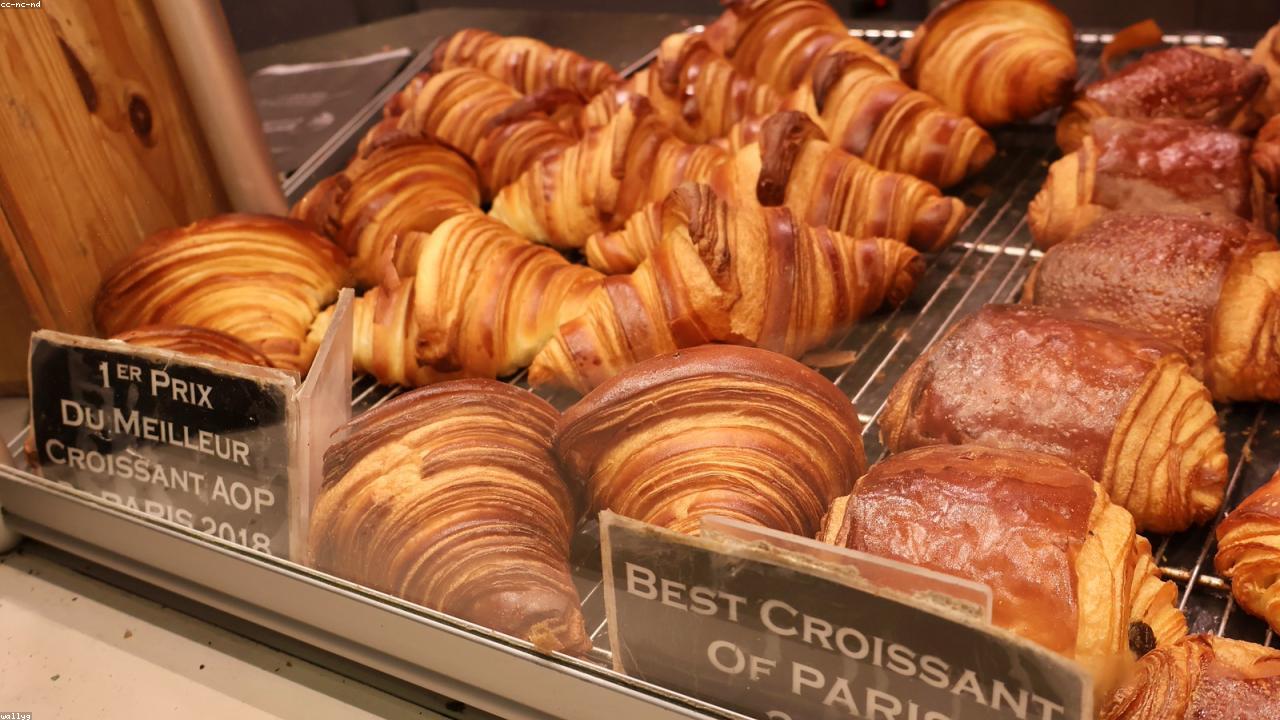
The croissant is the most famous member of viennoiserie — the family of yeast-leavened, laminated breakfast pastries that bridges bread and patisserie. Pull one apart and you should see a honeycomb of open, glossy crumb wrapped in a shell so crisp it shatters and scatters flakes across the plate. That contrast — crackling shell, tender interior — is the entire point, and it is engineered, not accidental.
For a pastry so tied to France, its roots are firmly Central European. Understanding how it travelled, and how it is built, is the difference between buying a great croissant and an expensive imitation.
A Viennese ancestor, a French masterpiece
The croissant descends from the Austrian kipferl, a dense crescent-shaped bread documented in Vienna for centuries. The popular tale that it was invented to celebrate the 1683 defeat of the Ottoman siege — its crescent mocking the Ottoman flag — is a charming legend with no contemporary evidence. It is best enjoyed as folklore, not fact.
What is documented is the pastry's arrival in Paris. In 1838–39, the Austrian artillery officer August Zang opened a Viennese bakery on the rue de Richelieu, introducing Parisians to the kipferl and other viennoiserie. French bakers adopted the shape but transformed the substance: over the following decades they swapped the bread-like dough for laminated, butter-layered dough. The recognisably modern, flaky croissant — made with that folded dough — only appears in French recipe books in the early twentieth century.
What makes it flaky: lamination
A croissant's magic is lamination — the technique of folding a slab of butter inside the dough and rolling it out repeatedly. Each fold multiplies the layers: three "letter" folds turn one butter layer into 27, and the butter stays in continuous sheets between paper-thin walls of dough.
In the oven, two things happen at once. The water in the butter and dough flashes to steam and pushes each layer apart, while the dough's own yeast adds lift. Because the butter is sealed between layers rather than mixed in, it fries the dough from within, crisping the outside and leaving the open, lacy crumb prized by bakers. Get the butter too warm and the layers fuse into something heavy and bready; too cold and the butter cracks instead of stretching. Temperature control is everything.
Why the butter matters
Croissants live and die by their butter. French bakers favour high-fat (around 82–84%) AOP butters such as Charentes-Poitou, prized for low water content and a high melting point that makes them pliable without leaking. A wetter, supermarket butter releases more steam — sometimes good for lift — but tears more easily during rolling.
This is also where the croissant splits into "all-butter" versus margarine-laminated versions. An all-butter croissant browns more deeply, smells nutty, and goes stale faster; a margarine one is often straighter in shape (French bakeries traditionally reserve the straight shape for all-butter and the curved crescent for margarine, though this convention is fading).
The croissant family
Once you have laminated dough, a whole counter opens up:
- Pain au chocolat — the same dough wrapped around two batons of dark chocolate.
- Croissant aux amandes — day-old croissants split, soaked in syrup, filled with frangipane and re-baked; a clever way to rescue yesterday's bake.
- The "twisted" and "glazed" croissants of modern bakery culture — cruffins, supreme croissants and crookie hybrids — all riff on the same laminated base.
- Cruffin & kouign-amann — cousins that push the lamination toward caramelised, muffin-shaped territory.
How to spot a great croissant
You can judge a croissant before you taste it:
- Listen. The shell should crackle audibly and shed flakes when you tear it.
- Look at the crumb. Inside you want an irregular, open honeycomb — not a tight, cakey, uniform interior.
- Feel the weight. A good croissant is surprisingly light for its size; a heavy one means the butter melted into the dough.
- Smell. Fresh butter and toasted notes, never greasy or sour.
And eat it fast: a croissant is at its peak within a few hours of baking and stales quickly once the crisp shell absorbs humidity.
Frequently asked questions
Is the croissant French or Austrian?add
Both, in a sense. Its crescent shape and ancestor (the kipferl) are Austrian, brought to Paris in the late 1830s. But the laminated, butter-layered dough that defines the modern croissant was developed by French bakers, who turned a bread into a pastry.
Why is my croissant not flaky?add
Almost always a temperature problem. If the butter gets too warm during rolling it blends into the dough instead of staying in separate sheets, so there are no layers to puff apart. Cold dough, cold butter and a properly hot oven are the keys to flakiness.
What is the difference between a croissant and puff pastry?add
Both are laminated, but croissant dough contains yeast and is allowed to ferment, giving it a bread-like rise and chewier crumb. Puff pastry has no yeast — it relies entirely on steam between the layers, producing a crisper, more shattering result with no bready interior.
How many layers does a croissant have?add
Typically 27 to 55 alternating layers of dough and butter, created by giving the dough a series of three folds (a "double" or "single" turn). More layers are not always better — too many and the distinct flakes blur together.