There is no such thing as a single "Italian pastry" tradition — there are at least twenty. Italy was a patchwork of kingdoms and city-states until 1861, and its dolci still answer to region rather than nation. A pastry beloved in Palermo can be unknown in Bologna; a Christmas cake from Milan means little in Naples.
What ties them together is a sensibility: bright citrus, fresh ricotta and almonds in the south; butter, cream and chocolate in the north; and everywhere a daily ritual built around coffee. This guide maps that diversity and points you to the deep-dives on Italy's most exported sweets.
The bar and caffè: where Italians actually eat pastry
To understand Italian pastries you have to understand the bar — which in Italy means not a pub but the neighbourhood coffee bar, often attached to a pasticceria. The Italian day starts here, standing at the counter with an espresso or cappuccino and a sweet, frequently a cornetto (the softer, sweeter Italian cousin of the croissant) or a cream-filled bun.
Breakfast in Italy is almost defiantly sweet and almost always quick: a pastry and coffee taken on the feet, paid at the till, gone in five minutes. The pasticceria proper is reserved for weekends and occasions, when a tray of mixed paste is boxed, ribboned and carried to Sunday lunch — the Italian equivalent of bringing flowers.
Italy's signature pastries
Two Italian classics have their own full deep-dives — here is the short version of each:
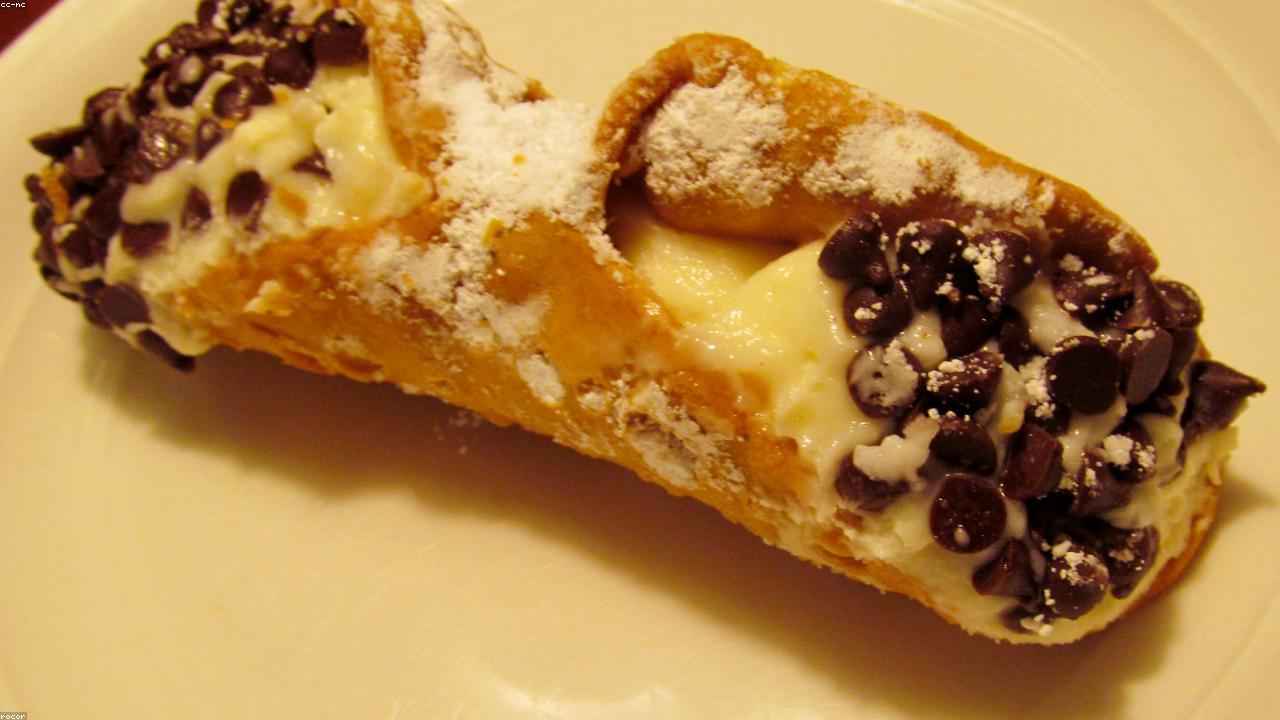
- Cannoli — Sicily's emblem: a crisp, blistered fried shell piped to order with sweet ricotta, brightened with citrus zest and often studded with candied peel or chocolate. The shell must be filled at the last moment to stay crunchy.
- Mille-feuille / millefoglie — the Italian take on the "thousand-leaf," layering crisp puff pastry with crema pasticcera; you will find it dusted with icing sugar in pasticcerie from Milan to Rome.
Follow the links for the history and technique behind each. The rest of this page covers the regional dolci that rarely leave Italy.
The south: Sicily and Naples
The southern table is the richest in spectacle. Beyond the cannolo, Sicily gives us cassata siciliana — a domed sponge soaked in liqueur, wrapped in green marzipan and crowned with candied fruit, a baroque legacy of Arab and Spanish rule. The island is also the home of granita and of dense almond and pistachio pastes.
Naples answers with the sfogliatella, a clam-shaped pastry of dozens of crisp, fanned layers hiding a semolina-and-ricotta filling — there is a flaky riccia version and a smooth shortcrust frolla. The city is also famous for the babà, a yeasted sponge drenched in rum syrup; this Italian rum cake arrived via the French and Polish courts and became thoroughly Neapolitan.
Tiramisù and the northern dolci
The north leans creamier and less sun-drenched. Its most famous export is tiramisù — savoiardi (ladyfingers) soaked in espresso, layered with sweetened mascarpone and dusted with cocoa. Though now global, it is a relatively modern invention, generally traced to the Veneto in the latter half of the twentieth century.
The region also gives us zabaglione (a warm whipped custard of egg yolks, sugar and Marsala), panna cotta from Piedmont and a strong tradition of hazelnut and chocolate, the homeland of gianduja. Where the south reaches for ricotta and citrus, the north reaches for mascarpone, cream and coffee.
Panettone and the calendar of celebration
Many Italian dolci belong to a date on the calendar. The towering example is panettone, the Milanese Christmas bread: a tall, domed, naturally leavened cake studded with candied citrus and raisins, made from a wet dough fermented over days with a sourdough lievito madre. Its lighter Veronese rival, pandoro, is star-shaped and dusted with vanilla sugar.
The year is full of such bakes: colomba (a dove-shaped panettone) at Easter, zeppole di San Giuseppe for Saint Joseph's Day, chiacchiere (fried ribbons) at Carnival. In Italy, the pastry tells you the season as reliably as the weather.
Frequently asked questions
What is the most famous Italian pastry?add
Sicilian cannoli are probably Italy's most recognised pastry abroad, but tiramisù, the Neapolitan sfogliatella and Christmas panettone all have strong claims. Italy has no single national pastry — each region champions its own.
What is Italian rum cake?add
"Italian rum cake" usually refers to the Neapolitan babà (babà al rum) — a light yeasted sponge soaked in rum syrup. The name is also used in Italian-American bakeries for a sponge layered with cream and brushed with rum. Both descend from the same European yeasted-cake tradition.
Why do Italians eat pastry standing up at the bar?add
The Italian breakfast is built around the neighbourhood coffee bar. People stop on the way to work for an espresso or cappuccino and a sweet such as a cornetto, eaten quickly at the counter. The sit-down pasticceria is saved for weekends and occasions.
What is the difference between a cornetto and a croissant?add
They share a crescent shape and laminated origins, but the Italian cornetto is softer, sweeter and more bread-like, often enriched with egg and sugar and flavoured with citrus or vanilla. The French croissant is crisper, flakier and more savoury-leaning, built on more butter and sharper lamination.